Showing posts with label Essay. Show all posts

Thursday, November 6, 2014

Essay for Week 12: The "Bad Guys" of English Fairy Tales

Throughout English Fairy Tales, many treacherous and evil characters can be found. These "bad guys" share many traits with each other, but their tales often end in very different circumstances.

In the fairy tale Mouse and Mouser, the "Mouser," or the cat takes on the role of villain. At the start of the story, the mouse goes to visit the cat, who he finds spinning yarn behind the hall door. After making some small talk about the trousers the cat is making, the mouse begins to tell a story which the cat does not take kindly to. The mouse says that while sweeping his room, he had found some money and decided to buy himself a meat dish. He goes on to accuse the cat of swiping it from the windowsill on which he set it to cool. The "bad guy" cat admits to his crime, saying "and I'll eat you," before devouring the poor mouse whole.
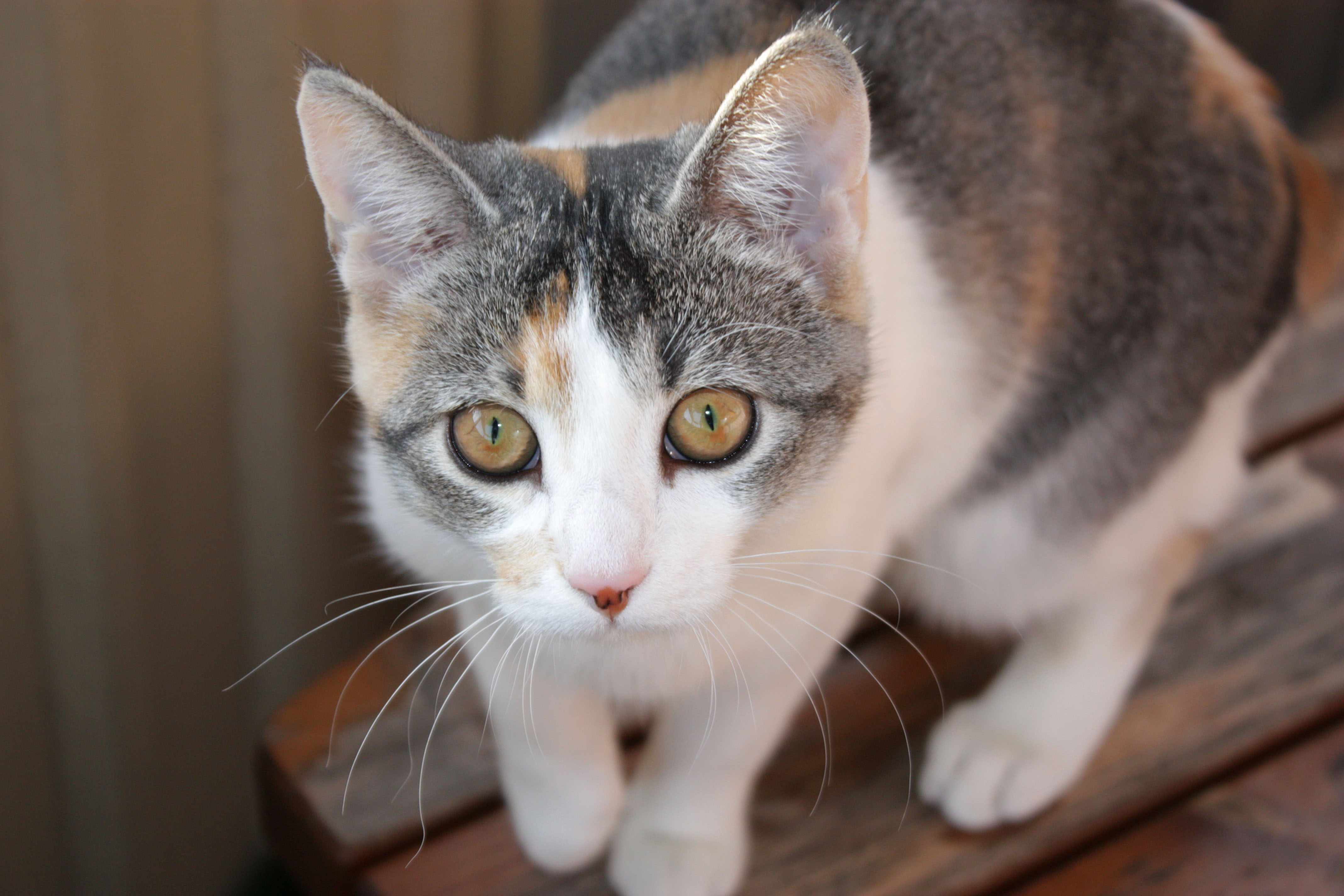
 File:Tortoiseshell she-cat.JPG 
Much like the Mouser, the "bad guy" in Mr Fox preys on the weak and innocent. Unlike the Mouser, however, Mr Fox does not get away with his crimes. In the beginning of the tale, the fair Lady Mary, in spite of all her other suitors, picks Mr Fox as the man she shall marry. Mr Fox was brave and gallant, although no one knew much about him. One day, near their wedding day, Lady Mary decides to seek out Mr Fox's castle while he is away on business. Mary enters Mr Fox's castle, and much to her horror, finds a closet full of beautiful young women that Mr Fox has murdered. Just as Mary discovers this, she looks out the window to see Mr Fox dragging another one of his victims into the castle. Mary escapes, and informs her brothers of his crimes. The next day, this "bad guy" meets justice at the sword end of Mary's many friends and family.

Thursday, October 30, 2014

Essay for Week 11: Heroes of Robin Hood Ballads

Throughout mythological and folkloric tales, many examples of heroes can be found. The Ballads of Robin Hood provide no exception to this trend. Although Robin Hood may not fulfill the traditional idea of the chivalrous knight in shining armor, his many noble deeds more than prove that he is a true hero.
(Robin Hood: Wikimedia Commons)

In the tale Rescuing Three Squires, our heroic protagonist Robin Hood one day happens across a crying old woman. When Robin Hood questions the woman as to why she is crying, the old woman informs Robin Hood that each of her three sons have been sentenced to death for simply hunting a deer in the forest that the king claimed as his own. The hero Robin soon comes up with a plan to save the old woman's three sons. Robin Hood first seeks out a old beggar, and trades clothes with him to gain a disguise. Dressed as a lowly beggar, Robin Hood meets up with the Sheriff and offers to be the hangmen for the three men. The hero Robin Hood, risking his life and limb for three strangers, blows loudly upon his horn, calling his men to his side. With the help of his men, Robin Hood and the three squires escape into the forest.

Robin Hood's noble deeds do not end with him saving three lives. In the tale The Noble Fisherman Robin Hood once again takes to a disguise, this time pretending not be be a beggar, but instead a poor fisherman. Robin Hood meets a woman at the docks, who offers him a job on her boat.While Robin Hood is out at sea, a group of french pirates attempt to board the boat that Robin Hood is working on. The Hero Robin Hood draws his bow and shoots each and ever last one of the pirates. If saving the whole crew of the boat isn't heroic, I don't know what is!

Thursday, October 23, 2014

Essay for Week 10: Tricksters and Fools of Myths of the Cherokee

Throughout most folkloric tales, one can find numerous examples of both tricksters and fools. The Myths of the Cherokee are no exception to this trend.

In the Cherokee tale The Rabbit Goes Duck Hunting, a story is told of a rabbit who was so boastful that no matter whatever he saw anyone else do, he would claim he could do it as well! This trickster was even known to devise schemes to convince the other animals of his lies. The boastful rabbit one day sees the otter diving down deep into the water and eating fish, and decides to claim that he can do this as well. This tricky rabbit convinces all of the other animals of his ability, however, the otter claims that he also eats ducks, and the rabbit immediately claims to do the same. When the trickster rabbit attempts to fulfill this bet by placing a noose around one of the ducks necks, it takes off into the air, taking the rabbit along for the ride. In the end, this former trickster only shows himself to be a fool.


(The Cherokee's Ultimate Trickster, the Rabbit: Wikimedia Commons)


We see the rabbit once again take on the role of trickster in How the Rabbit Stole the Otter's Coat, albeit this time more successfully. In this story, the rabbit hears that among all the animals, the otter had the finest coat of them all. The rabbit soon hatches a plan to steal the otter's coat. The rabbit locates the otter on his way to a council meeting and travels with him. When they come to a place that the rabbit calls The Place Where it Rains Fire, the rabbit warns the otter that he should place his coat on a nearby tree limb so that it does not get burnt during a fire storm in the night. The trickster then throws hot coals over the otter in the middle of the night, shouting to him"it's raining fire!" When the otter runs to the water for cover, the rabbit steals his coat.

Thursday, October 2, 2014

Essay for Week 7: Tricksters and Fools of Tibetan Folk Tales

Tricksters and fools play a large part in many mythological and folkloric tales. In the Tibeten Folk Tales, we see many examples of these characters.

In the tale The Tiger and the Frog, the trickster Frog creates a ruse that convinces a hungry tiger not to eat him. When the Tiger and the Frog first meet, the Tiger's first instinct is to gobble this small creature up. However, the frog declares that he is king of all frogs, saying that he can jump any distance and do anything. He proceeds to challenge the Tiger to see who can jump further across a nearby river. When the Tiger jumps across, this trickster bites his tail and uses him to get across the river! He then spits up the Tiger's fur and deceives him into believing that it was from a Tiger he had eaten the previous day. The scared Tiger runs away!


One of these tricky creatures from the Tibetan Folk Tales falls victim to his own ruse in How the Fox Fell a Victim to His Own Deceit. This tale begins with a mother tiger bringing a baby fox back to her cub to be a playmate. While out on her hunt one day, this mother tiger finds a baby calf, and brings it back to be a playmate for her cub as well. When the calf arrives,however, the fox becomes jealous. The mother tiger dies, and the trickster fox tells both the calf and the tiger that the other is planning on killing the other! In the end, the calf and the tiger figure out that the fox has tricked them, and instead it the the fox who is made to be a fool.

In the story How the Sacred Duck Got His Yellow Breast, a rabbit and a frog find a golden pot on top of a mountain. Unable to decide who would get the pot, they decide to race for it. The frog, however, knowing that he would be unable to beat the rabbit in a race, gathers two lookalikes to sneak in and take his place along the path!

Thursday, September 25, 2014

Essay for Week 6: Magic and the Supernatural in the Monkey King

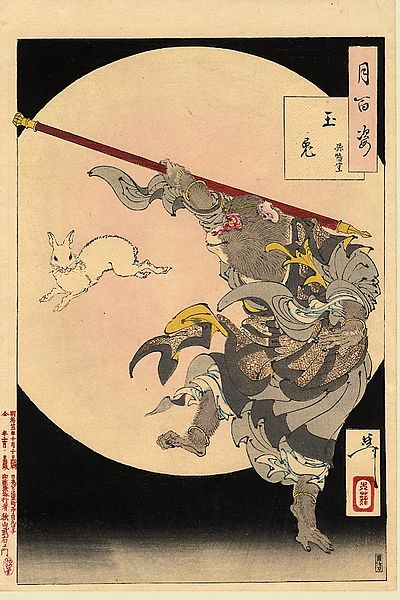
The tale of the monkey king is a tale of magic and the supernatural. From the birth of Sun Wu Kung, to his ascension to a Budda, magic fills the tales of his life.

In the beginning of the story of the Monkey King, in the passage Handsome King of the Apes, Sun Wu Kung is born. This birth is far from natural, however! The future king of the monkeys is born out a stone egg, and is even made of stone himself!

The Monkey King's supernatural abilities do not end there. In the passage Learning the Art, Sun Wu Kung learns to practice magic from his priestly master. Sun Wu Kung is able to leap into the air and walk amongst clouds that form beneath his feet.

 (Sun Wu Kung: Wikimedia Commons)

Sun Wu Kung further demonstrates his magic capabilities in the story of The Devil-King.. When Sun Wu Kung returns to his home, he finds that his cave has been taken over by a devil. This devil is no match for the Monkey King's new magic powers, however. Sun Wu Kung uses magic to turn his own hairs into tiny little monkeys to attack the demon, and ends the devil once and for all with a blow from his own knife.

In Notscha, Son of Li Dsing, Sun Wu Kung once again finds himself in a battle. This time, he faces the son of a god! During this fight, both Notscha and Sun Wu Kung use magic to transform themselves into a three headed being with six arms. The fight continues for a time, until Sun Wu Kung utilizes his hair once more to make a phantom of himself, and strikes Notscha from behind.

In the final story of Sun Wu Kung, The Travellers Honoured, Sun Wu Kung and other supernatural immortal beings meet with the Buddha. Sun Wu Kung is appointed God of Victorious Strife, and ascends to his celestial abode.

Thursday, September 18, 2014

Essay for Week 5: Magic and the Supernatural in Twenty-Two Goblins

Magic and the supernatural appear frequently throughout mythological and folkloric tales, and the story Twenty-Two Goblins is no exception. In almost every riddle told by the goblin, there is some element of magic or supernatural beings. Of course, even the goblin himself is a supernatural being! The "goblin" is actually a creature that is possessing a corpse in the graveyard.

In The Three Lovers, a beautiful farmer's daughter has three suitors of whom she cannot choose to marry. Unfortunately, the farmer's daughter becomes ill and passes away. One of her suitors, however, travels far and learns of magic to bring the dead back to life. He gathers her remains and brings her back to the world of the living.

We see both supernatural beings and magic in the tale Brave, Wise, Clever. When Moonlight, the daughter of a king's counsellor, is kidnapped, three men who seek her hand in marriage attempt to rescue her. The clever man builds a magic flying carriage to get the men to where Moonlight was being kept, while the brave man then slays the giant that had taken her.

In the tale The Four Brothers, we hear a story of, as the title suggests, four brothers, each of whom has a different magic skill. Although the brothers in the story refer to their skills as "sciences" that they have learned, these powers are clearly supernatural.The first brother can add flesh to the skeleton of any animal. The second possesses the skill to add skin and hair to any flesh. The third brother says that he can add eyes and other organs to any creature with flesh, skin and hair. The final brother has the most impressive ability; he can bring the creature to life. Unfortunately for these four brothers, they bring a lion to life who promptly kills them all.

Thursday, September 11, 2014

Essay for Week 4: Tricksters and Fools of Tutinameh, or Tales of a Parrot.

Throughout mythological and folkloric writings, many examples of tricksters and fools can be found. The Persian story series The Tooti Nameh or Tales of a Parrot, by Ziya'al-Din Nakhshabi (1801) is no exception to this trend. Both in the overarching tale, and the individual stories told by the parrot, fools and tricksters appear.

The Nobleman who Concealed a Snake in His Sleeve In this story told by the parrot, a snake tricks a nobleman into hiding him from an enemy. This trickster approaches the nobleman and, seemingly frightened, begs the nobleman to hide him from his potential killer. After the nobleman agrees to hide the snake in his sleeve, and once the snake's enemy passes, the snake tells the nobleman he is going to kill him! Some may call the nobleman a fool, and the snake certainly seems to think so, going so far as to call him a "blockhead", but in the end, the nobleman manages to distract the snake and kill it with a rock.
(Source: Flickr)

Of the Merchant and the Barber In this tale, the barber makes a major fool of himself. It begins with a wealthy merchant, who having no children of his own, decides to distribute his amassed wealth among the orphans and the poor. That night, the merchant has a vision in his dream telling him he shall be rewarded for his generosity. The vision tells him that he will appear to the merchant as a brahmin the next day, and that the merchant is to strike him on the head at which he will turn to gold. When this happens, the barber witnesses it and foolishly believes that striking any brahmin on the head will turn him to gold. This of course, causes much trouble for the barber.

We not only see tricksters and fools in the stories told by the parrot, but also in the overarching tale itself. Night after night, each time Khojisteh wishes to leave to her lover, the parrot tricks her into staying by telling her stories. Throughout the story he acts as if he only wants to help Khojisteh, but as soon Miemun returns, the parrot immediately tells him what has happened, upon which Miemun kills Khojisteh. The parrot is truely the ultimate trickster in Tales of a Parrot.

Thursday, September 4, 2014

Essay for Week 3: Tricksters and Fools of Aesop for Children (Winter)

In continuation of my essay last week, I wanted to further examine the element of tricksters in fools in the writings of Aesop. Looking into Aesop for Children, illustrated by Milo Winter, there are many examples of both fools and tricksters.

In The Wolf and the Kid, we see a rare instance in which an animal who is usually played for a fool takes on the role of trickster. When the young goat strays away from his flock, he is caught by the Wolf and faces certain death. However, the Wolf underestimates the Kid, and makes a fool of himself when he grants the Kid's request for the Wolf to play him a tune on the pipe before he eats him. Just as the Kid had planned, the Shepard's dogs hear this tune and recognize it as the Wolf's supper song. They quickly come running and chase the Wolf away.

In some of Aesop's Fables, a character can be a trickster for one animal, but a fool for another. In The Ass, the Fox, and the Lion, this is exactly what happens. In this tale, the Ass and the Fox are seemingly friends; they eat together, travel together, and generally get along. However, when they happen upon the Lion, the Fox offers to trick the Ass into a trap so that the Lion can eat him! After the Fox lures the Ass into a trap, the Lion reveals that he has tricked this trickster and eats the Fox instead.

The Monkey and the Cat provides another example of a trickster and a fool in Aesop's work. In this fable, the Monkey convinces the Cat to pull chestnuts out of a still burning fire by praising his skillfullness and downplaying his own. Although the Monkey promises the Cat that they can split the chestnuts when he gets them out, this trickster gobbles them up one by one as the come out. Their thievery is soon interrupted by their owner, leaving the Cat with burnt paws and no chestnuts, certainly feeling foolish.

 (The Monkey and the Cat. Wikimedia)

The Cat is once again made to be a fool in The Cat and the Birds. In this tale, the Cat tries to eat a family of birds by pretending to be a doctor and offering to help their sick. He even puts on glasses and carries a leather bag! In the end, the birds simply laugh him away.

Thursday, August 28, 2014

Essay for Week 2: Tricksters and Fools of Aesop's Fables (Jacobs)

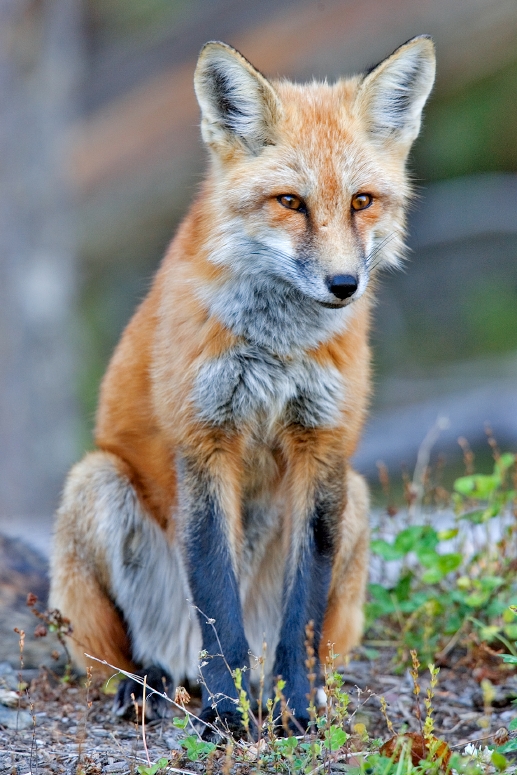
     Tricksters and fools are a common theme in Aesop's writings. Often, the character of the Fox is represented as a clever trickster. However, this is not always the case; sometimes the Fox can be seen as a fool to a more clever animal. Looking specifically at the The Fables of Aesop rewritten by Joseph Jacobs, we see many examples of both tricksters and fools.

     In the fable, The Lion in Love, we see the lion made to be a fool by some tricky humans. When the lion falls in love with a beautiful maiden, he approaches her parents and asks for her hand in marriage. The maiden's parents convince the lion that if he removes his claws and teeth, the maiden will marry him. However, when he returns with his claws and teeth removed, the parents laugh in his face! They had tricked the lion into removing the only things that could get him his way.

     Although the Lion was seemingly a fool in The Lion in Love, in the story The Lion, the Fox, and the Beasts, we see the Lion take the role of trickster instead. In this fable, the Lion feigns sickness and summons all the animals to hear his dying wishes. It is only the Fox who notices that all the animals who enter the Lion's den never come out again!
(Red Fox: Wikimedia Commons)
     In The Fox and the Stork, we see the Fox play a trick on the Stork by inviting him over for dinner and serving soup in a shallow dish from which the stork cannot eat. It is ultimately the Fox, however, who ends up looking like a fool when the stork in turn serves the fox dinner in a long narrow-necked jar.

    This isn't the only instance we see the Fox's tricky ways turned around on him, either. In The Fox, the Cock, and the Dog, the Fox attempts to lure the Cock down from his perch by saying that a universal truce has been declared between all animals. The Cock responds to this by telling the Fox to wait for his owner's dog to come congratulate the Fox on the news. The Fox wisely decides to leave instead.

     We see the Fox's true trickster come out when he makes a great fool of another animal in The Fox and the Goat. In this fable, the Fox finds himself stuck inside a well. When the Goat passes by, he claims there is a drought coming and that he sought out the well to insure he had water. After he convinces the Goat to join him in the well, he climbs the Goat to get out! He then leaves the poor goat trapped in the well, even mocking him as he leaves.